Evaluation of renewable energy from rice husk waste potential in Bali Island
Abstract
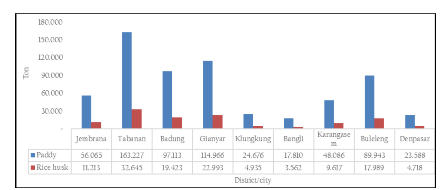
This study evaluates the potential of rice husk waste as a renewable energy source in Bali Island. Based on rice husk production data of 127,095 tons per year and an average calorific value of 14 MJ/kg, the estimated energy potential reaches 494,258,728.74 kWh per year. This amount is sufficient to meet the electricity needs of approximately 41,188 households, assuming an average consumption of 100 kWh per month. The evaluation results indicate that rice husks have strategic value as a local biomass resource that can be utilized through various technologies, such as direct combustion, gasification, and biomass briquetting. In addition to reducing dependence on fossil fuels, this utilization supports sustainable agricultural waste management. Therefore, an integrated approach involving policy support, appropriate technology, and community engagement is essential to effectively and sustainably implement energy utilization from rice husk waste in Bali and other agricultural regions in Indonesia.
Downloads